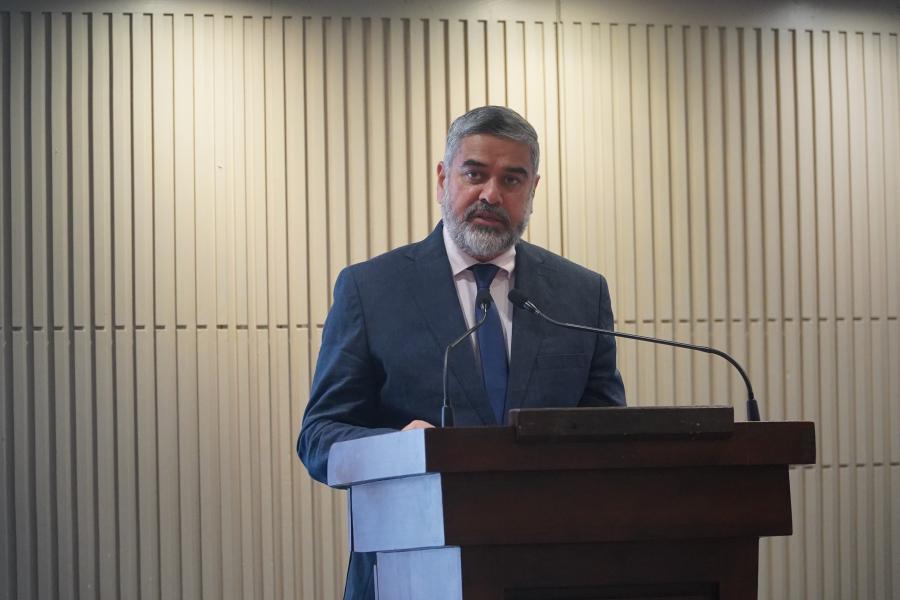
Asia Regional workshop on National Mechanisms for Implementation, Reporting and Follow-up (NMIRFs) and Treaty Body (TB) reporting Male, opening Remarks delivered Mr. Adnan Cheema, UN Resident Coordinator of Maldives (a.i)
National mechanisms and SDG coordinating bodies are equally critical in building “national ownership” of human rights recommendations
Your Excellency, Dr. Abdulla Khaleel, Minister of Foreign Affairs, Maldives
Mr. Justin Pettit, Acting Head, Human Rights Unit, Commonwealth Secretariat
Ladies and Gentlemen,
Dear participants and colleagues,
On behalf of the United Nations Resident Coordinator in the Republic of Maldives, Mr. Hao Zhang and on behalf of the entire UN in Maldives, I would like to first warmly welcome all present, especially delegates and representatives from the participating Commonwealth countries to this regional workshop for the Asian region. I extend my heartfelt appreciation to the co-organizers of this workshop: the Commonwealth Secretariat’s Human Rights Unit and the Office of the United Nations High Commissioner for Human Rights (OHCHR).
This Regional Workshop on National Mechanisms for Implementation, Reporting and Follow-Up (NMIRF) and Human Rights Reporting gathers representatives from Bangladesh, Brunei Darussalam, India, Malaysia, Maldives, Pakistan and Sri Lanka, and it is the fourth of its kind. It was preceded by workshops delivered for the Commonwealth member States in the Caribbean (Barbados, October 2023), the Pacific (Fiji, May 2024), and Africa (Tanzania, October 2024).
This three-day seminar will focus on progress made and challenges faced in establishing and operationalizing National Mechanisms for Implementation, Reporting and Follow-up (NMIRF) as a means to fulfilling the State’s international obligations on human rights reporting and implementation.
In a context where international obligations in the areas of human rights, sustainable development, and good governance are intersecting and multiplying, the need for effective, coherent and sustainable national structures to ensure their implementation has become an essential priority. NMIRFs and other similar bodies in the area of sustainable development, as tools for coordination have proved in countries to play a strategic role in instilling greater efficiency and integration to fulfilling international commitments.
National mechanisms and SDG coordinating bodies are equally critical in building “national ownership” of human rights recommendations by facilitating intersectoral and multi-stakeholder dialogues on human rights challenges and responses. These synergies will facilitate governments’ efforts to implement human rights recommendations and ensure they are better integrated in the work of Ministries of planning and the sectoral policies of line ministries.
The role of the UN system in this regard is to help consolidate awareness of these converging human rights and development agendas, and in building bridges between entities responsible for implementing and monitoring human rights and the SDGs, and to facilitate peer-exchanges.
In that regard, we warmly welcome all efforts undertaken by States to encourage cooperation on national mechanisms. As you may be aware, an international network of national mechanisms was recently created under the leadership of Morocco, Paraguay and Portugal. Also, an online platform for NMIRF, the so-called National Mechanisms’ Hub, where countries make information about their national mechanisms available to others, was recently launched and will be presented during this workshop.
Dear participants, I encourage you to make use of this invaluable opportunity to share your good practices in coordinating the preparation of human rights reports and making use of synergies between reporting under UN human rights mechanisms and the 2030 Agenda for Sustainable Development. Throughout these three days, we will be privileged to learn more from one another’s experiences and lessons learned on these questions.
Allow me at this juncture to also welcome the efforts made by the Office of the UN High Commissioner for Human Rights (OHCHR), particularly through the Voluntary Fund for Universal Periodic Review (UPR) Implementation and the Capacity-Building Programme on Human Rights Treaties, to support these initiatives. Overall, 70 national mechanisms have been created or strengthened over the past five years.
Unfortunately, it pains me to say that progress in the past two years has been severely impacted by the on-going liquidity crisis facing the United Nations. This event is therefore a rare opportunity where a space is being provided to reflect on each national mechanism or system and discuss avenues to improve them, including thanks to the guidance of facilitators present in this workshop and, more importantly, through peer learning, on good practices, challenges and lessons learnt.
Despite these cuts, the work of the United Nations continues. The United Nations Sustainable Development Cooperation Framework (UNSDCF) for Maldives covering 2022–2026, developed jointly with the Government, ensures that UN Maldives programming is aligned with national priorities and contributes directly to the country’s progress towards the SDGs. As we now embark on formulating the next UNSDCF—and as the Government develops its new National Development Plan—we have a timely opportunity to integrate recent human rights recommendations into both processes. Doing so will help translate these commitments into concrete action.
This moment is particularly fitting, given that the Maldives has completed several human rights reviews in the last two years, including by the treaty bodies on the International Covenant on Civil and Political Rights (ICCPR), the Convention on the Rights of Persons with Disabilities (CRPD), most recently the International Convention on the Elimination of All Forms of Racial Discrimination (CERD), and soon the Convention on the Rights of the Child (CRC) as well as the Human Rights Council Universal Periodic Review (UPR) just last month. These reviews have generated a wealth of human rights recommendations, in addition to those issued by five Special Procedure mandate-holders following their country visits to the Maldives in the last five years; and all that certainly require coordinated monitoring and implementation. Embedding these recommendations within the new UNSDCF and the National Development Plan will strengthen accountability and ensure that our collective efforts advance the rights and well-being of all people in the Maldives.
Dear participants, your presence here reaffirms our collective commitment to enhancing the capacity of national mechanisms for implementation, reporting and follow-up of human rights obligations and recommendations to play this fundamental transformative role. On behalf of the UN Country Team in Maldives, it is my pleasure to warmly welcome you all once again to the Maldives.
I also would like to thank the Government of the Republic of Maldives for hosting this event and supporting peer-to-peer learning and exchanges in the region. This is a clear indication of your commitment to not only continue engaging with the UN human rights mechanisms, but also to ensure efficient and effective implementation of the recommendations emanating from the international human rights mechanisms in the promotion and protection of human rights for all in the Maldives. The United Nations in Maldives as well as the Office of the UN High Commissioner for Human Rights (OHCHR) always stand ready to support and work together with the Government of Maldives on these efforts.
Dear participants, in closing, I encourage your active participation as we work together to enhance our collective skills and knowledge. Let us make the most of this gathering to build stronger partnerships, tackle challenges together, and advance our commitment to human rights, which will in turn accelerate the achievement of the Sustainable Development Goals (SDGs), “leaving no one behind”.
Once again, I wish you all a productive and successful workshop.



Speech by
Goals we are supporting through this initiative